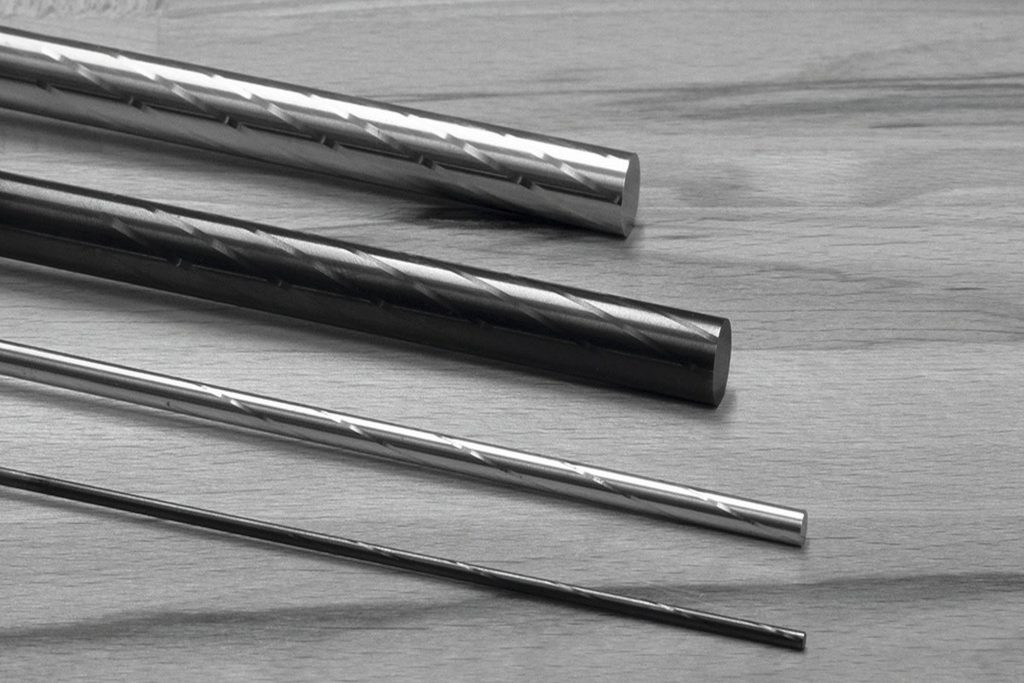
For greater process reliability and a wider process window in injection moulding, as well as significantly longer maintenance intervals, Dressel + Höfner Automotive now relies on DLC-coated ejector pins for venting from standard parts manufacturer KNARR based in Helmbrechts as a matter of course in its injection moulding tools.
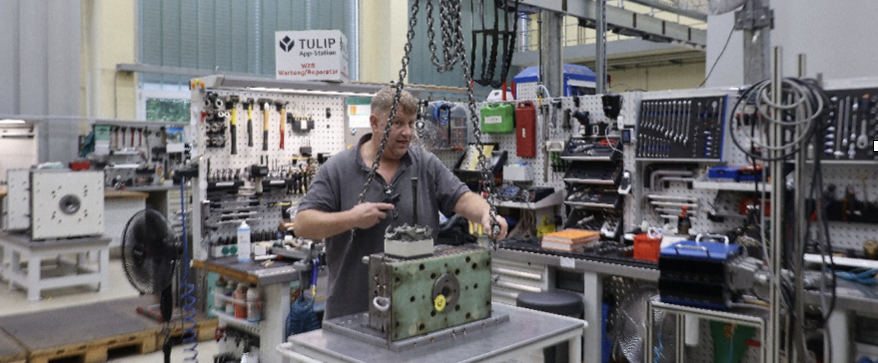
When the automotive industry demands highest quality, the experts at Dressel + Höfner Automotive GmbH, a Welp Group company based in Neustadt near Coburg (southern Germany), are highly sought-after partners for OEMs. This is where intelligent system and complete solutions in plastic injection moulding are created. Thanks to the effective use of synergy effects within the group, the company can act as a full-service provider for projects on request, seamlessly covering all stages from product development through toolmaking, injection moulding, assembly and painting, right through to delivery to the customer’s production line.
Maximum process reliability and stability are required when supplying an OEM’s assembly line. Consistently high quality and absolute adherence to delivery dates are taken for granted. One hundred percent good parts are expected, and if this is not met, a customer complaint can quickly become costly and resource-intensive to resolve. For this reason, those responsible at Dressel + Höfner Automotive invest considerable effort to prevent complaints reliably from the outset.
Orders come predominantly from the automotive industry
Around 90 per cent of orders at Dressel + Höfner Automotive come from the automotive industry, with the remaining ten per cent coming from sectors such as general mechanical engineering or electronics. “Orders for the automotive industry are roughly evenly split between technical components and visible parts,” explains Sven Hübner, Head of Toolmaking at the Neustadt-based company. “This includes numerous parts with delicate and complex geometries that demands the full expertise of our experienced employees in both toolmaking and the injection moulding process. And yet, one is never completely immune to surprises.”
The 15 employees in the company’s in-house toolmaking shop maintain around three hundred active tools. At Dressel + Höfner Automotive, the mould plates of the tools are usually made from plastic mould steel 1.2312, while the remaining parts of the mould base are generally made from cold work steel 1.1730. For high-volume applications, corrosion-resistant steels such as 1.2085 are also employed. Moulding components are primarily made from hardened 1.2343 ESR, although other high-alloy steels up to 60 HRC are also utilised. This is particularly necessary when processing filled materials — for example, one component for a head-up display contains around 65 percent glass fibre. Achieving economically viable tool lifetimes in such cases is only possible with highly wear-resistant materials.
Make or buy
At Dressel + Höfner Automotive, the in-house toolmaking team focuses on the inserts, while the mould frames of the injection moulding tools are sourced entirely externally. The toolmakers have the capacity to cover around one-fifth of the group’s tool demands, with a weight limit of 5 tonnes. These also include multi-component tools. The rest is supplied by reliable partners in the region, as well as from Portugal, and occasionally, depending on the customer’s specifications, by qualified companies from China. In addition to new tools, the internal toolmaking team is also responsible for the repair and maintenance of existing tools.
For Sven Hübner and his team, the standard parts specialist KNARR from Helmbrechts has long been more than just a supplier. KNARR has established itself as the first choice, especially for ejection systems: the combination of product quality, practical solutions and a clear strategy creates security and efficiency in daily operations. The collaboration, however, extends far beyond this. The mould makers also rely on KNARR for other components, confirming the southern German company’s status as a reliable partner for long-term success in toolmaking.
Filling and demoulding finest geometries
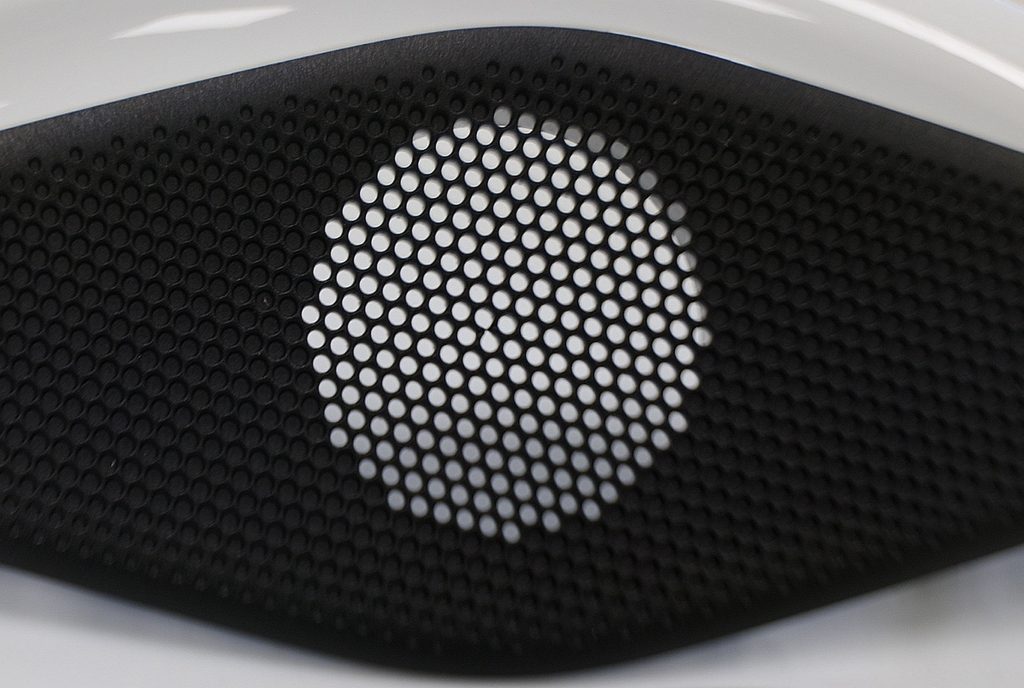
The range of manufactured products is very diverse. The visible parts produced by Dressel + Höfner Automotive include, for example, speaker grilles for the current Volkswagen Tiguan model. As the Heat of Toolmaking explains, “Such fine grille structures are normally designed in the mould so that they are filled from the inside out during the injection moulding process. Otherwise, there is a risk that the plastic will simply “starve” in the delicate flow paths of the grille and parts of the cavity will remain unfilled.”
At the same time, these products also require a sophisticated approach to demoulding – the delicate structures of the speaker grille should be removed from the injection mould with minimum stress and without deformation. This in turn requires complex ejector systems that push the fine geometries out of the mould as gently as possible.
Edge areas allow alternative injection
The speaker grille for the Tiguan, made from PC/ABS (polycarbonate/acrylonitrile-butadiene-styrene) — a thermoplastic blend that combines the advantages of polycarbonate and ABS — presented a different challenge: “The part has a large edge area around the actual grille – filling this with an injection through the grille would be a major challenge,” reports Hübner. “Our experts therefore designed the four-cavity mould for two left and two right parts, each with three injection points along the edge area – the relatively small grille structure is then filled in a circular pattern from the edge.”
Demoulding of the grille structure is assisted in each cavity by a KNARR ejector set with a total of 49 linked 1millimetre ejectors, which carefully push the grille out of the mould. Additional ejectors are also positioned under the edge areas of the speaker grille. This ensures the delicate demoulding of the visible part.
The simulation is only as good as the data it based on
The mould flow analysis showed the convergence of the plastic flows in the centre of the grille. The compressed air in this area, along with the unavoidable gas emissions from the plastic during injection moulding, could be vented easily in the simulation via conventional vents, and the melt filled the grille structure homogeneously and completely.
For the first few thousand shots, the mould performed exactly as predicted. Dressel + Höfner Automotive delivered 100% good parts to the OEM’s assembly line. Then, after around 20,000 flawless parts, a defect suddenly appeared — initially barely visible, so it might not have been noticed by the operator at the injection moulding machine. However, the incoming inspection at VW immediately detected the defect. The consequence: a customer complaint with all the resulting implications.
Process on a razor’s edge
Finding the error was relatively easy – neither the injection moulding machine parameters nor the material had changed, and no defect could be detected in the equipment itself. “That left the tool – and we quickly suspected that the fault was due to insufficient venting,” recalls Hübner. “The tool was serviced, cleaned and reassembled. And indeed – the defect had completely disappeared.”
However, the relief was short-lived – what the toolmakers had already anticipated came to pass: after another 5,000 shots or so, the fault reappeared. “The process was literally on a razor’s edge,” explains Hübner. Within a few thousand shots, the conventional venting system becomes blocked – this required a maintenance interval that could severely compromise the cost-effectiveness of the already tightly budgeted production of the speaker grille. We therefore had to look for another solution.
Intelligent venting via the ejectors
Especially with highly viscous materials, the venting helix cannot be enlarged arbitrarily, as structures exceeding 0.02 millimetres would probably lead to burr formation. An alternative is to use many small venting channels. Ejectors that can be equipped with a venting channel are ideal for this purpose. Our standard parts partner KNARR had such ejectors with integrated venting in its range – but only from a diameter of 2 millimetres.
Thanks to close communication with the KNARR field service, the toolmakers were able to convince their standard parts supplier to equip ejector pins with just a 1millimetre diameter with venting geometry and include them in the standard range. Despite the spiral-shaped vent channel, the round shaft of the ejector remains precisely guided over its entire circumference. For stability optimisation, KNARR uses an HSS variant for small diameters.
Advantages clearly evident in direct comparison
In this tool, the four complete ejector sets, each with 49 ejectors, were all equipped with corresponding ejector pin variants with venting. This allows trapped air in the mould and plastic outgassing to escape effectively. The success was immediate: “The only change we made was to replace the ejectors. That alone enabled us to quadruple the maintenance interval to more than 20,000 shots,” emphasises Hübner. “Even now, venting is no longer the limiting factor – other issues are now what determine the maintenance interval.”
Venting as a standard feature
Hübner and his team have come to rely on KNARR’s venting solution as standard for both round and flat ejectors. “The generous additional venting provided by these standard parts significantly increases process reliability and stability in the injection moulding operation,” emphasises the Head of Toolmaking. “The process has become considerably more resilient with the new ejectors, and the process window for the machine operator has thus opened up substantially. The earlier and more smoothly air and outgassing products can be released from the tool, the lower the likelihood of problems occurring.”
The standard application of ejectors for venting also means that they are used even in cases where they are not strictly necessary. Nevertheless, according to Hübner, it pays off: “Yes, ejectors for venting are slightly more expensive than the standard models. But the additional cost is low – and in every tool we have equipped with them, the process window has been noticeably expanded. And even a single maintenance saving compensates for the additional costs many times over.”
Ready-to-install ejector pins from the standard parts specialist
Even for the standard versions with venting, KNARR offers the option of pre-machining — a service that Sven Hübner now regularly takes advantage of. “The ejectors arrive and go straight to tool assembly – at a stage when the customer is often already counting down the seconds until production starts,” says Hübner. The pre-contoured ejector pins free up a lot of time during this phase. In addition, we now order all ejector pins with DLC coating. This further improves process reliability and ensures excellent sliding properties without the use of lubricants. This is crucial, because lubricants could potentially block venting channels with dimensions as small as 1/100 millimetre.
To ensure that ejectors with venting are reliably used, the item numbers are stored as standard and included in the parts list. This ensures that the correct ejectors are used even during repairs. “Together with our partners at KNARR, we are making our processes more resilient and stable,” emphasises Hübner. “This ultimately secures the process for our customer as well— a factor that should not be underestimated in the competition for lucrative contracts.”
Richard Pergler